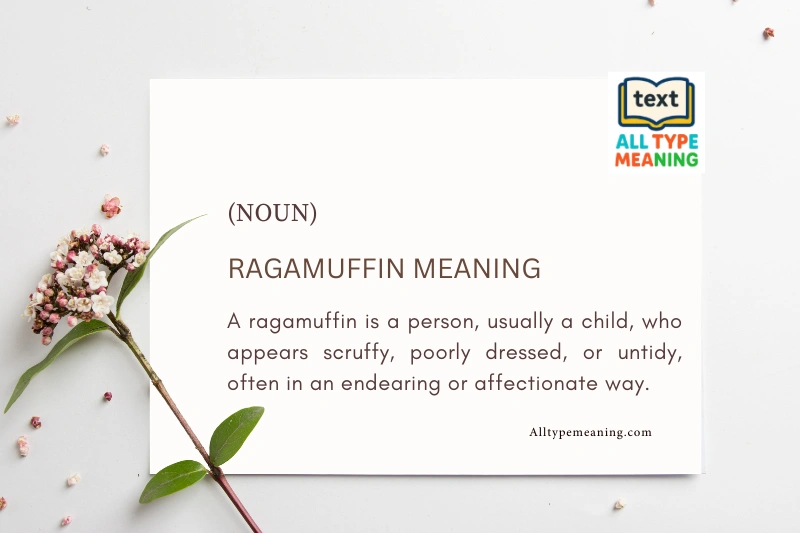
The term ragamuffin meaning describes a person, typically a child, who appears scruffy, messy, or poorly dressed, often in a charming or playful manner. Originally from Middle English, this word has transformed from referring to underprivileged or neglected children to embodying a sense of affectionate charm and lovable disarray.
Grasping the meaning of ragamuffin is beneficial for students, professionals, and language lovers, as it shows up in literature, casual conversations, and even cultural expressions such as Caribbean reggae music. By understanding the concept of ragamuffin, readers can enhance their vocabulary, interpret texts with greater accuracy, and appreciate the historical and cultural nuances behind this fascinating term.
Quick Stats: Ragamuffin at a Glance
| Aspect | Details |
|---|---|
| Word Type | Noun |
| Pronunciation | /ˈræɡəˌmʌfɪn/ |
| Origin | Middle English (14th century) |
| Common Usage | Informal/Literary |
| Synonyms | Waif, urchin, street child |
| Frequency | Moderate (literary contexts) |
| Difficulty Level | Intermediate |
1. The Core Ragamuffin Meaning Explained
At its heart, the ragamuffin meaning refers to a person, typically a child, who appears disheveled, poorly dressed, or unkempt. The word ragamuffin creates an immediate visual image of someone wearing tattered clothes, with messy hair, and perhaps a mischievous gleam in their eyes.
When we ask “what is ragamuffin,” we’re exploring a term that has both literal and figurative applications. In its most basic sense, a ragamuffin is:
- A person dressed in ragged or worn-out clothing
- Someone with an unkempt or untidy appearance
- Often used to describe children who look scruffy or disheveled
- Can carry either sympathetic or affectionate connotations
The beauty of understanding what is a ragamuffin lies in recognizing that this word doesn’t merely describe appearance—it often conveys a sense of endearing scruffiness or charming dishevelment. Unlike harsher terms for poor appearance, “ragamuffin” frequently carries warmth and affection.
Historical Context and Evolution
The ragamuffin has evolved significantly since its first recorded use in the 14th century. Originally, the term had stronger associations with actual poverty and social status. Medieval ragamuffins were genuinely destitute individuals, often children, who lived on the margins of society.
However, as language evolved, so did the ragamuffin meaning. By the 19th and 20th centuries, the word began taking on more affectionate tones, often used by parents to describe their messy children or by authors to create sympathetic characters.
2. Etymology and Origins: Where Did Ragamuffin Come From?
Understanding the ragamuffin meaning requires exploring its fascinating etymological journey. The word “ragamuffin” has mysterious origins that linguists have debated for decades.
Medieval Beginnings
The earliest recorded use of ragamuffin dates back to Middle English, appearing in various forms:
- “Ragamoffyn” (1344)
- “Ragamuffyn” (medieval manuscripts)
- “Raga muffin” (early variations)
The word likely combines two elements:
- “Rag” – referring to torn cloth or tattered clothing
- “Muffin” – possibly from an old term meaning a soft, shapeless person
Alternative Theories
Several theories attempt to explain what is ragamuffin etymologically:
Theory 1: Demon Connection 🔥 Some scholars suggest “ragamuffin” might derive from “Ragamoffyn,” a demon mentioned in the medieval mystery play “Piers Plowman.” This theory would give the ragamuffin meaning supernatural undertones.
Theory 2: Dutch Influence 🇳🇱 Another possibility connects the word to Dutch maritime culture, where “ragamuffijn” might have described poorly dressed sailors or dock workers.
Theory 3: Descriptive Compound ✨ The simplest explanation suggests that “ragamuffin” naturally evolved as a descriptive compound, combining the obvious visual elements of ragged clothing with the idea of a soft, rounded person.
Cultural Spread and Adoption
As English spread globally, so did the ragamuffin meaning. Different English-speaking regions adopted the word with slight variations in usage and connotation. In American English, “ragamuffin” often carries more affectionate tones than its British counterpart.
3. Modern Usage and Cultural Significance
Today’s ragamuffin meaning extends far beyond its historical roots. Understanding what is ragamuffin in contemporary contexts reveals how language adapts to changing social attitudes and cultural values.
Literary Applications
Authors frequently employ “ragamuffin” to create vivid character descriptions:
- Children’s Literature: Characters like “ragamuffin orphans” evoke sympathy and adventure
- Historical Fiction: Period novels use the term to establish time and social setting
- Contemporary Writing: Modern authors might describe casually dressed characters as “ragamuffins”
Everyday Conversational Use
In casual conversation, what is a ragamuffin becomes more playful:
- Parents affectionately calling messy children “little ragamuffins”
- Friends teasing each other about casual appearance
- Self-deprecating humor about one’s own disheveled state
Cultural References and Pop Culture
The ragamuffin has found its way into various cultural expressions:
- Music: Bob Marley and other reggae artists embraced “ragamuffin” or “raga muffin” as musical style descriptors
- Fashion: “Ragamuffin chic” describes intentionally disheveled fashion trends
- Art: Visual artists use ragamuffin imagery to convey authenticity and relatability
Regional Variations and Global Perspectives
The ragamuffin meaning varies subtly across different English-speaking regions and cultures. Understanding what is ragamuffin requires recognizing these geographical and cultural nuances.
British English Usage
In British contexts, “ragamuffin” often retains stronger connections to its historical meaning:
- More likely to describe actual poverty or neglect
- Sometimes used in social commentary
- Appears frequently in historical and period literature
American English Adaptations
American usage tends toward more affectionate applications:
- Common in parent-child interactions
- Often describes temporary messiness rather than permanent poverty
- Popular in children’s entertainment and media
Caribbean and Jamaican Influence
The term “raga muffin” (often spelled as two words) gained special significance in Caribbean culture:
- Ragamuffin Music: A subgenre of reggae and dancehall
- Cultural Identity: Embracing the “ragamuffin” as authentic, grassroots culture
- Positive Reclamation: Transforming potential negativity into cultural pride
Australian and New Zealand Usage
In these regions, “ragamuffin” maintains British influences while developing local characteristics:
- Often used in educational contexts
- Popular in children’s literature and media
- Maintains affectionate connotations
Synonyms, Related Terms, and Word Family
Exploring what is ragamuffin means understanding its relationship to similar terms and concepts. The ragamuffin meaning connects to a rich vocabulary of descriptive words.
Close Synonyms
Words that share similar meanings with ragamuffin:
- Waif: Emphasizes abandonment or homelessness
- Urchin: Street-smart child, often mischievous
- Guttersnipe: More derogatory, implies lower social class
- Gamine: French-influenced, often describes tomboyish girls
- Street child: Modern, socially conscious terminology
Related Descriptive Terms
Ragamuffin connects to broader vocabulary describing appearance:
- Disheveled: General untidiness
- Scruffy: Rough, unkempt appearance
- Tattered: Specifically about torn clothing
- Bedraggled: Wet and messy appearance
- Unkempt: Lack of grooming or care
Cultural and Historical Connections
Understanding ragamuffin meaning also involves related historical and cultural concepts:
- Oliver Twist characters: Dickensian orphans and street children
- Depression-era imagery: Dust Bowl children and economic hardship
- Bohemian culture: Artistic communities embracing unconventional appearance
- Counterculture movements: Deliberately casual or anti-establishment dress
Word Formation and Grammar
The word “ragamuffin” follows interesting grammatical patterns:
- Plural: Ragamuffins
- Adjective form: Ragamuffin-like, ragamuffinish (rare)
- Usage as modifier: “Ragamuffin appearance,” “ragamuffin child”
- Diminutive forms: “Little ragamuffin,” “ragamuffin baby”
Conclusion:
The term “Ragamuffin meaning” denotes an individual, typically a child, who looks untidy, inadequately dressed, or disordered. This word has its roots in Middle English, where it originally referred to underprivileged or neglected youth, but it has since developed to embody a more affectionate or playful meaning. Beyond mere appearance, the term “ragamuffin” conjures images of lovable scruffiness and holds literary, cultural, and musical importance—especially in Caribbean reggae music as “raga muffin.”
Some synonyms for this term include waif, urchin, and street child. Although it is mainly applied to children, it can also be used informally to describe adults. In contemporary contexts, the term is used in a gentle and descriptive manner, highlighting charm rather than criticism. Discover our full guide on Skedaddle meaning and see how this quirky term is influencing India’s lifestyle trends and online conversations.
Frequently Asked Questions
1. What exactly does ragamuffin mean?
A ragamuffin is a person, usually a child, who appears disheveled, poorly dressed, or unkempt. The ragamuffin meaning encompasses both the literal description of someone in ragged clothes and the figurative sense of endearing scruffiness. It’s often used affectionately rather than critically.
2. Is calling someone a ragamuffin offensive?
Generally, no! The modern ragamuffin meaning is typically affectionate rather than offensive. Parents often call their messy children “ragamuffins” lovingly. However, context matters—using it to genuinely mock someone’s poverty or appearance could be hurtful. When understanding what is ragamuffin, consider the speaker’s intent and relationship to the person being described.
3. What’s the difference between ragamuffin and urchin?
While both describe disheveled children, there are subtle differences. “Ragamuffin” focuses more on appearance (ragged clothing, messy hair), while “urchin” often implies street-smartness and mischief. What is a ragamuffin emphasizes how someone looks, whereas an urchin might be well-dressed but still mischievous. Both terms can be used affectionately.
4. Can ragamuffin be used for adults?
Yes, though it’s less common. The ragamuffin meaning can apply to adults who appear disheveled or casually dressed. It might describe someone’s “ragamuffin appearance” after a long day or weekend. However, it’s most frequently used for children. Understanding what is ragamuffin includes recognizing its primary association with youth.
5. What is the connection between ragamuffin and reggae music?
In Caribbean culture, particularly Jamaica, “raga muffin” (often two words) became associated with a style of reggae and dancehall music. This musical ragamuffin meaning embraces grassroots, authentic culture and represents the voice of common people. Artists like Bob Marley helped popularize this cultural interpretation of what is a ragamuffin.
Discover more word meanings, slang, and vocabulary tips at All Type Meaning 📚