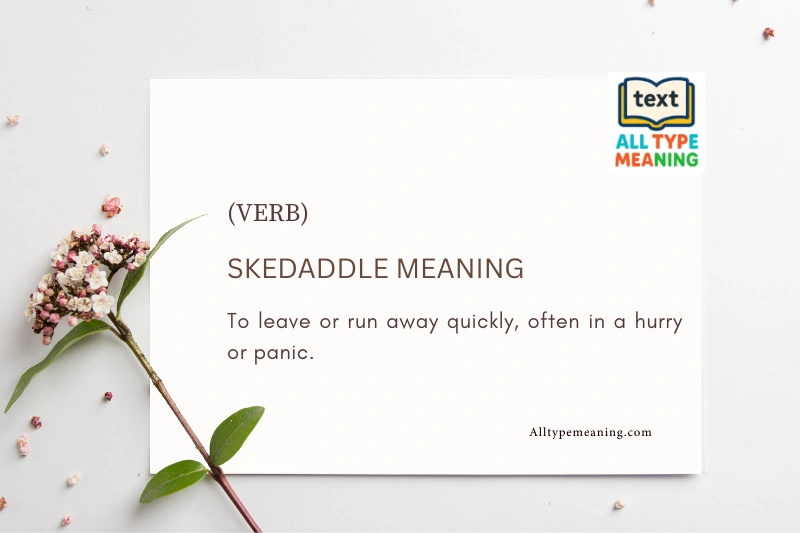
Skedaddle meaning may sound funny, but it carries a simple idea: to leave or run away quickly, often in a rush or to avoid trouble. This playful verb, with roots in 1860s American English, adds color and energy to everyday conversations. Instead of just saying “leave,” “skedaddle” paints a lively picture of someone hurrying off, whether it’s kids running before the rain or friends rushing to catch a bus. For students, professionals, and language learners, knowing words like “skedaddle” makes English richer, more expressive, and fun to use.
Let’s explore its meaning, history, and usage to see why this word still skedaddles through modern conversations!
Quick Stats About “Skedaddle”
| Aspect | Details |
|---|---|
| Part of Speech | Verb (intransitive) |
| Pronunciation | /skɪˈdædəl/ (ski-DAD-ul) |
| Origin | American English, 1860s |
| Difficulty Level | Beginner to Intermediate |
| Usage Frequency | Informal/Casual |
| Synonyms Count | 15+ common alternatives |
| Common Misspellings | scadaddle, scadattle, skidaddle |
What Does Skedaddle Mean?
Skedaddle is an informal English verb that means to leave hastily or hurriedly. When someone skedaddles, they’re departing quickly, often because they’re in a rush, want to avoid trouble, or simply need to get somewhere fast.
The beauty of this word lies in its playful sound and vivid imagery. Unlike formal words like “depart” or “leave,” skedaddle carries a sense of urgency mixed with a touch of humor. It’s the kind of word that makes you smile while perfectly describing the action of hurrying away! 😊
Key Characteristics of Skedaddle:
- Always informal: You wouldn’t use this in a business report
- Implies speed: It’s not just leaving, it’s leaving quickly
- Often suggests urgency: There’s usually a reason for the haste
- Can be playful: Often used in a lighthearted context
Common Usage Examples:
- “We better skedaddle before the rain starts!” ⛈️
- “The kids skedaddled when they saw the teacher coming.”
- “I need to skedaddle to catch my bus.”
- “Let’s skedaddle out of here!”
The Fascinating History and Etymology of Skedaddle
Understanding where skedaddle comes from makes the word even more interesting! This uniquely American word has a colorful history that dates back to the Civil War era.
Origins in the 1860s
The word skedaddle first appeared in American English around 1861-1862, right during the American Civil War. Initially, it was used primarily by soldiers to describe retreating or fleeing from battle quickly. The term became popular among Union soldiers who used it to describe Confederate troops retreating rapidly from combat.
Etymology Theories
Language experts have several theories about where skedaddle came from:
- Greek Connection: Some believe it derives from the Greek word “skedannynai,” meaning “to scatter” or “to disperse”
- Scandinavian Influence: Others suggest connections to Scandinavian words like the Swedish “skynda,” meaning “to hurry”
- American Innovation: Many linguists believe it’s a purely American creation, combining various sounds to create this expressive word
Evolution Through Time
After the Civil War, skedaddle moved from military slang into general American vocabulary. By the 1870s, it was commonly used in everyday speech across the United States. The word’s playful sound and clear meaning helped it spread quickly through different social groups.
Interestingly, while many Civil War-era slang words disappeared over time, skedaddle has remained popular for over 160 years! This longevity speaks to the word’s effectiveness in expressing the specific action of hurried departure. 🕰️
How to Use Skedaddle in Everyday Conversation
Now that you understand the skedaddle meaning, let’s explore how to use it naturally in your daily conversations. The key is remembering that this is an informal, friendly word perfect for casual situations.
Perfect Situations for Using Skedaddle:
- When you’re running late: “I need to skedaddle or I’ll miss my appointment!”
- Avoiding uncomfortable situations: “Things got awkward, so I decided to skedaddle.”
- Leaving before trouble: “We should skedaddle before the security guard comes back.”
- Family and friend conversations: “Kids, time to skedaddle to grandma’s house!”
- Playful contexts: “Let’s skedaddle to the ice cream shop before it closes!” 🍦
Sentence Structure Examples:
- Simple present: “I skedaddle whenever there’s drama.”
- Past tense: “She skedaddled out of the meeting early.”
- Future tense: “We’ll skedaddle after lunch.”
- Present continuous: “They’re skedaddling to catch the movie.”
- Imperative: “Skedaddle before mom finds out!”
Tone and Context:
Remember that skedaddle works best in:
- Casual conversations with friends and family
- Informal writing like personal blogs or social media
- Storytelling and humorous situations
- Children’s books and educational materials
- Friendly workplace chatter (but not formal presentations)
What to Avoid:
Don’t use skedaddle in:
- Formal business documents
- Academic papers
- Legal documents
- Professional presentations
- Serious or somber contexts
Synonyms, Similar Words, and Common Confusions
Understanding words similar to skedaddle will help you choose the right word for different situations. While many words mean “to leave quickly,” each has its own specific flavor and appropriate usage.
Close Synonyms:
- Scram – Very informal, often implies being told to leave
- Vamoose – Another fun American slang word meaning to leave quickly
- Scurry – Suggests moving quickly with short, hurried steps
- Bolt – Implies sudden, rapid departure (like a bolt of lightning)
- Dash – Quick movement, often with purpose
- Flee – More serious, suggests escaping from danger
- Rush off – Hurrying to get somewhere
- Take off – Informal way of saying to leave quickly
Formal Alternatives:
- Depart hastily
- Exit rapidly
- Leave promptly
- Withdraw quickly
- Retreat swiftly
Common Misspellings and Confusions:
Many people struggle with spelling skedaddle correctly. Here are the most common mistakes:
- “Scadaddle” – Missing the ‘k’ and adding an extra ‘a’
- “Scadattle” – Wrong vowels in the middle
- “Skidaddle” – Using ‘i’ instead of ‘e’ at the beginning
- “Schedaddle” – Adding an ‘h’ after ‘sc’
Memory Trick: Remember “SKE-DADDLE” – think “SKE” like “sketch” and “DADDLE” like “paddle” but with a ‘d’! 🎨
Intensity Levels:
Different synonyms suggest different levels of urgency:
- Mild urgency: saunter off, head out, take leave
- Moderate urgency: skedaddle, rush off, dash away
- High urgency: bolt, flee, escape, run for it
Regional Variations and Cultural Usage
The use and understanding of skedaddle varies across different English-speaking regions and cultures, making it a fascinating example of how language travels and evolves.
American Usage:
In the United States, where the word originated, skedaddle remains widely understood and used, though primarily in informal contexts. Americans of all ages recognize the word, though younger generations might use it less frequently than their grandparents did.
Regional American Variations:
- Southern US: Often pronounced with a longer drawl: “ske-DAA-dul”
- Midwest: Sometimes combined with other regional expressions: “skedaddle on over”
- Northeast: Used more in storytelling and humorous contexts
- West Coast: Popular in casual, laid-back conversations
British English:
While British speakers generally understand skedaddle meaning, it’s less commonly used in everyday British conversation. British alternatives might include:
- “Scarper” (British slang for leaving quickly)
- “Leg it” (run away quickly)
- “Make tracks” (leave promptly)
- “Clear off” (go away)
Other English-Speaking Countries:
- Australia: Understood but rarely used; Australians prefer “scoot,” “shoot through,” or “nick off”
- Canada: Similar usage to American English, especially in areas close to the US border
- New Zealand: Generally understood through American media influence
- South Africa: Recognized but not commonly used in local dialects
Cultural Context in Literature and Media:
Skedaddle frequently appears in:
- Children’s books and educational materials 📚
- Western movies and TV shows (reflecting its Civil War origins)
- Comedy sketches and humorous writing
- Family-friendly entertainment
- Historical fiction set in 19th-century America
Modern Digital Age Usage:
In today’s internet culture, skedaddle meaning has found new life in:
- Social media posts for humorous effect
- Memes and viral content
- Gaming communities (especially when retreating in games)
- Text messages between friends and family
- YouTube videos and TikToks for comedic timing
The word’s playful nature makes it perfect for online communication where people want to express urgency while keeping things light and fun! 🌐
Conclusion:
The skedaddle meaning refers to leaving or fleeing swiftly, typically in haste or to evade difficulties. This whimsical verb emerged in American English during the 1860s, becoming widely used during the Civil War when soldiers employed it to depict quick withdrawals. In contrast to more formal terms such as “depart,” skedaddle injects vitality and humor into discussions. It is frequently utilized in informal dialogue, narrative contexts, or lighthearted writing, enhancing the expressiveness of language.
Although it is mainly an American expression, it is recognized globally, and understanding the meaning of skedaddle allows learners and speakers to enrich their English vocabulary in an enjoyable and engaging manner. Discover our full guide on AIPMT full form and see how this quirky term is influencing India’s lifestyle trends and online conversations
Frequently Asked Questions
1. Is “skedaddle” considered proper English?
Yes! While skedaddle is informal, it’s definitely proper English. It appears in major dictionaries like Merriam-Webster, Oxford, and Cambridge. The word has been part of standard American English for over 150 years. However, save it for casual conversations rather than formal writing or professional settings.
2. What’s the difference between “skedaddle” and “flee”?
Great question! While both words mean to leave quickly, there are important differences:
- Skedaddle is playful, informal, and often used in non-serious situations
- Flee is more formal and usually implies escaping from real danger or threat
- Example: “The kids skedaddled when they saw the ice cream truck” vs. “People fled from the burning building”
3. Can I use “skedaddle” in past tense?
Absolutely! The past tense of skedaddle is “skedaddled.” For example:
- “She skedaddled before the meeting ended”
- “We skedaddled out of there when it started raining”
- “The cat skedaddled when the dog barked” The word follows regular English verb conjugation patterns.
4. Is “skedaddle” only used in American English?
While skedaddle originated in America, it’s understood throughout the English-speaking world thanks to movies, TV shows, and books. However, it’s most commonly used in American English. British speakers might prefer words like “scarper” or “leg it,” while Australians might say “shoot through.”
5. Are there any similar words to skedaddle that are more formal?
Yes! If you need a more formal alternative to skedaddle, try these options:
- Depart hastily (most formal)
- Leave promptly
- Exit quickly
- Withdraw rapidly
- Take one’s leave These work better in business emails, academic writing, or professional situations where skedaddle might seem too casual.
Discover more word meanings, slang, and vocabulary tips at All Type Meaning 📚