Ubiquitous Meaning is something you might have wondered about if you’ve noticed certain words appearing everywhere. 🤔 Today, we’re diving deep into this fascinating term, exploring its definition, usage across different languages, and why it’s such an important word in modern vocabulary.
Whether you’re a student preparing for exams, a language enthusiast, or someone eager to expand your vocabulary, this article will provide everything you need to know about this remarkable word. Let’s embark on this linguistic journey together! 🚀
What Does Ubiquitous Mean? The Core Definition 📖
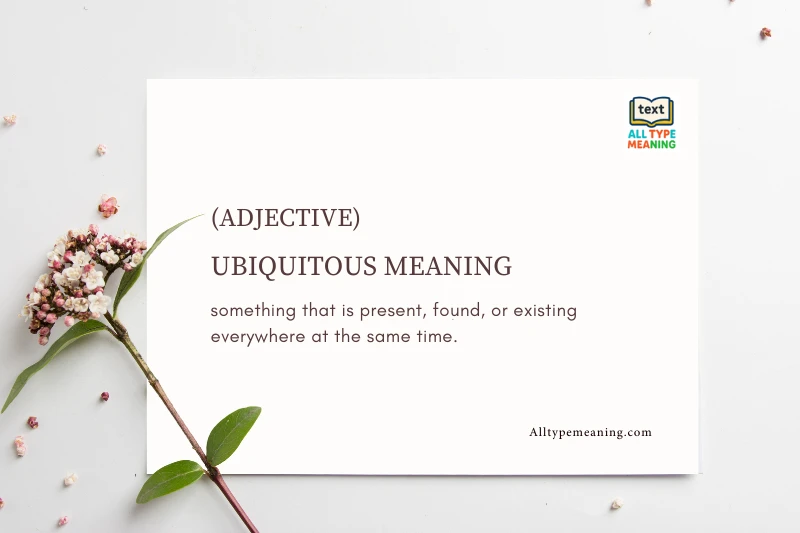
The word “ubiquitous” (pronounced: yoo-BIK-wi-tuhs) is an adjective that means existing or being everywhere at the same time. When something is ubiquitous, it appears to be present in all places simultaneously or is found everywhere you look.
Simple Definition: Something that is found everywhere or seems to be present all around us.
Etymology: The word comes from the Latin “ubique,” meaning “everywhere,” combined with the suffix “-ous,” which means “full of” or “characterized by.”
Key Characteristics of Ubiquitous Things:
- Widespread presence 🌐
- Constant visibility
- Universal occurrence
- All-encompassing nature
Example: Smartphones have become ubiquitous in modern society – you can see them being used everywhere, from busy streets to quiet libraries, making them a truly universal presence in our daily lives. 📱
The beauty of understanding the ubiquitous meaning lies in recognizing how this word perfectly captures the essence of things that have become so common that we almost take their presence for granted.
Ubiquitous Meaning in Different Indian Languages 🇮🇳
Understanding the ubiquitous meaning across various Indian languages helps create a deeper connection with the concept. Let’s explore how different regional languages express this idea:
Ubiquitous Meaning in Hindi 🕉️
In Hindi, ubiquitous can be translated as:
- सर्वव्यापी (Sarvvyapi) – meaning all-pervading
- हर जगह मौजूद (Har jagah maujud) – meaning present everywhere
- व्यापक (Vyapak) – meaning widespread
Hindi Example: इंटरनेट आजकल सर्वव्यापी हो गया है। (Internet aajkal sarvvyapi ho gaya hai – Internet has become ubiquitous nowadays.)
Ubiquitous Meaning in Tamil 🌺
In Tamil, the concept is expressed as:
- எங்கும் நிறைந்த (Engum niraindha) – filled everywhere
- எல்லா இடத்திலும் உள்ள (Ella idathilum ulla) – existing in all places
Ubiquitous Meaning in Telugu 🎭
Telugu speakers use:
- సర్వత్రా వ్యాపించిన (Sarvatra vyapinchina) – spread everywhere
- ప్రతిచోటా ఉన్న (Pratichota unna) – present at every place
Ubiquitous Meaning in Bengali 🎨
In Bengali:
- সর্বব্যাপী (Shorbobapi) – all-pervading
- সর্বত্র বিরাজমান (Shorbotra birajman) – present everywhere
Other Regional Meanings:
- Marathi: सर्वत्र विद्यमान (Sarvatra vidyaman)
- Malayalam: എല്ലായിടത്തും ഉള്ള (Ellayidathum ulla)
- Kannada: ಎಲ್ಲೆಡೆಯೂ ಇರುವ (Elledeyu iruva)
- Gujarati: સર્વત્ર હાજર (Sarvatra hajar)
This linguistic diversity shows how the concept of ubiquity is universally understood across cultures! 🌈
Real-World Examples and Applications 🌟
Understanding the ubiquitous meaning becomes easier when we see it in action through real-world examples. Let’s explore various contexts where this word perfectly describes our modern experiences:
Technology Examples 💻
- Social Media: Platforms like Facebook, Instagram, and WhatsApp have become ubiquitous, connecting people across all demographics and geographical boundaries.
- Google Search: Google’s presence is so ubiquitous that “googling” has become synonymous with searching for information online.
- WiFi Signals: In urban areas, WiFi networks have become ubiquitous, available in cafes, malls, airports, and even public spaces.
Cultural Examples 🎭
- Fast Food Chains: McDonald’s golden arches have achieved ubiquitous status worldwide, representing globalization’s reach.
- English Language: English has become ubiquitous in international business, education, and digital communication.
- Pop Music: Certain songs become so popular that they achieve ubiquitous status, playing everywhere from elevators to shopping malls.
Environmental Examples 🌍
- Plastic: Unfortunately, plastic pollution has become ubiquitous, found from the deepest oceans to the highest mountains.
- Air Pollution: In many urban areas, smog and air quality issues have become ubiquitous concerns.
Biological Context 🧬
The ubiquitous meaning in biology refers to organisms, substances, or processes found universally across different environments or species. Examples include:
- Bacteria: Some bacterial species are ubiquitous, thriving in diverse environments
- DNA: Genetic material is ubiquitous among all living organisms
- Water: Essential for all known forms of life, making it ubiquitous in biological systems
These examples demonstrate how the word “ubiquitous” helps us describe the pervasive nature of modern phenomena that have become integral parts of our daily existence. ✨
Synonyms, Antonyms, and Related Terms 📝
Expanding your vocabulary around the ubiquitous meaning involves understanding related words and their nuances:
Synonyms (Words with Similar Meanings):
- Omnipresent – Present everywhere simultaneously 🌐
- Pervasive – Spreading widely throughout
- Universal – Applicable or common to all
- Widespread – Found or distributed over a large area
- Prevalent – Existing very commonly or widely
- Rampant – Flourishing or spreading unchecked
- Endemic – Natural to or characteristic of a specific place
- Abundant – Existing in large quantities
Antonyms (Words with Opposite Meanings):
- Rare – Not found in large numbers 🔍
- Scarce – Insufficient for the demand
- Limited – Restricted in size, amount, or extent
- Localized – Restricted to a particular area
- Absent – Not present or included
- Uncommon – Not happening or done often
- Sporadic – Occurring at irregular intervals
Related Terms and Phrases:
- Ubiquity (noun) – The state of being ubiquitous
- Ubiquitously (adverb) – In a ubiquitous manner
- Omnipresence – The quality of being present everywhere
- Saturation – The state of being completely filled or soaked
Understanding these related terms helps you use “ubiquitous” more effectively in both written and spoken communication! 💭
How to Use “Ubiquitous” in Sentences 💬
Mastering the ubiquitous meaning involves learning how to use it naturally in various contexts. Here are practical examples for different situations:
Academic Writing Examples 📚
- “Social media has become ubiquitous among teenagers, fundamentally changing how they communicate and interact.”
- “The ubiquitous nature of smartphones has transformed the way we access information and navigate our daily lives.”
- “Climate change effects are becoming ubiquitous, affecting ecosystems across all continents.”
Professional Communication Examples💼
- “Our company aims to make sustainable practices ubiquitous across all departments.”
- “The ubiquitous adoption of remote work tools has revolutionized business operations.”
- “Data security concerns have become ubiquitous in the digital age.”
Everyday Conversation Examples 🗣️
- “Coffee shops seem ubiquitous in this neighborhood – there’s one on every corner!”
- “Streaming services have made entertainment ubiquitous, available anytime, anywhere.”
- “The smell of street food is ubiquitous in busy markets.”
Creative Writing Examples ✍️
- “In the futuristic city, holographic advertisements were ubiquitous, floating in the air like digital butterflies.”
- “The sound of rain became ubiquitous during the monsoon season, creating a constant symphony.”
Tips for Natural Usage:
- Context matters: Ensure the situation truly involves something being everywhere
- Avoid overuse: Don’t use “ubiquitous” for merely common things
- Consider alternatives: Sometimes simpler words like “common” or “widespread” work better
- Pronunciation practice: Remember it’s “yoo-BIK-wi-tuhs”
By practicing these examples, you’ll develop a natural feel for when and how to use this powerful word effectively! 🎯
Common Mistakes and How to Avoid Them ⚠️
Understanding the Ubiquitous Meaning also involves recognizing common errors people make when using this word. Let’s explore these mistakes and learn how to avoid them:
Mistake 1: Confusing “Common” with “Ubiquitous”
Incorrect: “Pizza is ubiquitous food.” Correct: “Pizza restaurants have become ubiquitous in urban areas.”
Explanation: Ubiquitous implies presence everywhere simultaneously, not just popularity or frequency. 🍕
Mistake 2: Using it for Limited Scope
Incorrect: “This app is ubiquitous among my friends.” Correct: “This app has achieved ubiquitous adoption across all age groups globally.”
Explanation: True ubiquity extends beyond small groups to universal presence.
Mistake 3: Overusing the Word
Incorrect: “Smartphones are ubiquitous, social media is ubiquitous, and WiFi is ubiquitous.” Better: “Smartphones have become ubiquitous, making social media access and WiFi connectivity essential features of modern life.”
Mistake 4: Wrong Pronunciation
Common Error: “oo-BIG-wi-tous” Correct: “yoo-BIK-wi-tuhs”
Mistake 5: Grammatical Errors
Incorrect: “The ubiquitously of technology…” Correct: “The ubiquity of technology…” or “The ubiquitous nature of technology…”
Best Practices for Accurate Usage:
- Verify true universality before using the word 🔍
- Consider the scope – is it really everywhere?
- Use sparingly for maximum impact
- Practice pronunciation regularly
- Read examples from reliable sources
By avoiding these common pitfalls, you’ll use “ubiquitous” with confidence and precision! ✅
Conclusion: Embracing the Power of “Ubiquitous”
Throughout this comprehensive exploration of the ubiquitous meaning, we’ve discovered how this remarkable word captures the essence of our interconnected, globalized world. From smartphones and social media to environmental concerns and cultural phenomena, “ubiquitous” helps us articulate the all-encompassing nature of modern experiences.
Key Takeaways:
-
📖 Definition: Ubiquitous means existing everywhere simultaneously
-
🛠 Usage: Perfect for describing truly universal phenomena
-
🔊 Pronunciation: yoo-BIK-wi-tuhs
-
🗣 Context: Works across academic, professional, and casual settings
-
🌏 Global Understanding: Recognized across cultures and languages
The beauty of understanding the ubiquitous meaning lies not just in vocabulary expansion, but in developing a deeper awareness of the patterns that shape our world. Whether you’re writing an academic paper, having a casual conversation, or exploring ideas in multiple languages, this word provides a powerful tool for precise expression.
As we’ve seen through various examples – from the ubiquitous meaning in Hindi (सर्वव्यापी) to its applications in biology and technology – this concept transcends linguistic boundaries and connects us to universal human experiences.
Remember, language learning is a journey of discovery. Each new word like “ubiquitous” opens doors to more nuanced communication and deeper understanding. Keep practicing, keep exploring, and most importantly, keep curiosity alive in your linguistic adventures!
For another fascinating vocabulary journey, explore our 📚 guide on Prudence Meaning where we break down its definition, real-world usage, and cultural significance. ✨
Thank you for joining us on this exploration of the ubiquitous meaning. May this knowledge serve you well in your academic pursuits, professional endeavors, and personal growth. The world of words awaits your continued exploration!
Frequently Asked Questions (FAQs) ❓
1. What is the exact ubiquitous meaning in simple terms?
Answer: Ubiquitous means “found everywhere” or “existing in all places at the same time.” Think of it as something so common and widespread that you encounter it wherever you go. For example, smartphones have become ubiquitous in modern society – you see them being used everywhere! 📱
2. How do you pronounce “ubiquitous” correctly?
Answer: The correct pronunciation is “yoo-BIK-wi-tuhs.” Break it down as:
- “yoo” (like “you”)
- “BIK” (rhymes with “pick”)
- “wi” (like “we”)
- “tuhs” (like “tus”) Practice saying it slowly first, then speed up! 🗣️
3. What’s the difference between “ubiquitous” and “common”?
Answer: While both describe widespread occurrence, “ubiquitous” implies presence literally everywhere simultaneously, whereas “common” just means frequently encountered. For instance, cars are common in cities, but smartphones are truly ubiquitous – present in almost every situation and location globally. 🚗📱
4. Can “ubiquitous” be used to describe people?
Answer: It’s uncommon and often awkward to describe individual people as ubiquitous. However, you can use it for groups or types of people: “Street vendors have become ubiquitous in tourist areas” or “Social media influencers seem ubiquitous in popular culture.” 👥
5. What are some good synonyms for “ubiquitous” in academic writing?
Answer: Excellent academic alternatives include:
- Omnipresent (more formal)
- Pervasive (emphasizes spread)
- Widespread (more accessible)
- Universal (emphasizes scope)
- Prevalent (indicates dominance) Choose based on your specific context and audience! 📝
🌟 Learn more about such powerful words and their meanings at All Types Meaning 🌐