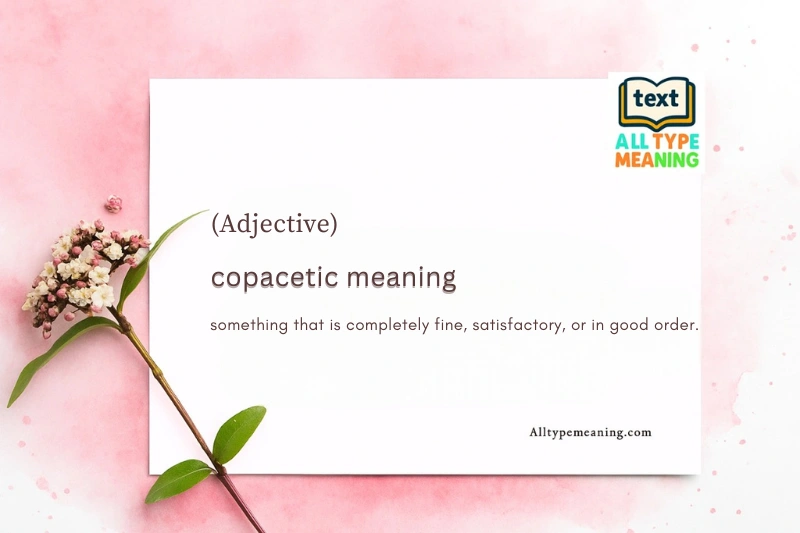
The copacetic meaning signifies that something is entirely acceptable, satisfactory, or in proper condition. It is a congenial word frequently employed in informal discussions to indicate that all is well. Grasping this concept is beneficial in everyday life, particularly for students, professionals, and language learners aiming to communicate confidently and naturally in English.
Continue reading to delve into its complete meaning, examples, and appropriate application in real-world contexts.
Quick Stats:
| Aspect | Details |
|---|---|
| Word | Copacetic |
| Part of Speech | Adjective |
| Pronunciation | koh-puh-SET-ik |
| Origin | Early 20th century American slang |
| Meaning | Completely satisfactory, fine, excellent |
| Synonyms | Fine, satisfactory, acceptable, OK |
| Usage Level | Informal to semi-formal |
| Popularity | Moderate (gaining usage) |
What Does Copacetic Mean?
The copacetic definition is straightforward yet delightful. When we define copacetic, we’re describing something that is:
Copacetic (adjective): Completely satisfactory, in excellent order, or going very well
In simpler terms, if things are copacetic, everything is fine, good, and running smoothly. There are no problems, and everything is just as it should be. The word carries a positive, reassuring vibe that makes it perfect for expressing contentment or approval.
A Grammatical Overview
Part of Speech
Copacetic functions as an adjective, meaning it describes nouns or states of being.
Pronunciation Guide
- Phonetic Spelling: koh-puh-SET-ik
- IPA: /ˌkoʊ.pəˈset.ɪk/ or /ˌkoʊ.pəˈsɛt.ɪk/
- Alternative Spellings: copasetic, copesetic (less common)
Pro Tip: The stress falls on the third syllable: co-pa-SET-ic! 🎵
Dictionary-Style Definition
Copacetic (adjective): In perfect order; completely satisfactory; excellent; fine.
Example: “After resolving the issue, everything was copacetic between them.”
Origin & Etymology: Where Did “Copacetic” Come From?
The origin of copacetic is one of the most debated topics among linguists! This mysterious word first appeared in American English around the 1910s-1920s, primarily in African American slang.
Possible Origins:
- African American Vernacular English (AAVE): Most scholars believe copacetic originated in Black communities, possibly in the Southern United States or Harlem during the Jazz Age.
- Hebrew Theory: Some suggest it comes from the Hebrew phrase “hakol b’seder” (הכל בסדר), meaning “all is in order.”
- French Connection: Others propose a link to French phrases, though this theory has less support.
- Bill “Bojangles” Robinson: The famous tap dancer is often credited with popularizing the word, though he likely didn’t invent it.
First Known Use: The earliest printed evidence appears around 1919 in American publications, cementing its place in early 20th-century slang! 📰
Detailed Usage: How to Use “Copacetic” Correctly
Understanding what is copacetic means knowing when and how to use it. Let’s break down the different contexts:
1. Describing Situations
When things are going smoothly or problems have been resolved:
- “Don’t worry about the project—everything’s copacetic now.”
2. Expressing Agreement or Approval
To show that something is acceptable or fine:
- “Is this arrangement copacetic with you?”
3. Reassuring Others
To calm concerns and indicate all is well:
- “We had a few issues earlier, but it’s all copacetic now.”
4. Informal Conversations
Copacetic fits perfectly in casual, friendly dialogue:
- “How are things?” “Pretty copacetic, thanks!”
Grammar Notes:
✔️ Typically used predicatively: “Everything is copacetic.” ✔️ Can be used attributively: “We have a copacetic relationship.” ✔️ Works with various subjects: situations, relationships, arrangements, plans ✔️ Often appears with words like: everything, all, things, situation
Common Collocations:
- Keep it copacetic
- Everything’s copacetic
- Seems copacetic
- Looks copacetic
- All copacetic
Synonyms & Antonyms
Synonyms
| Synonym | Meaning |
|---|---|
| Satisfactory | Meeting expectations; acceptable |
| Fine | Of good quality; in good condition |
| Acceptable | Able to be agreed upon; adequate |
| Excellent | Extremely good; outstanding |
| Hunky-dory | Very satisfactory; fine (informal) |
| Peachy | Very good; wonderful (informal) |
| Dandy | Excellent; first-rate |
| Groovy | Fashionable and exciting; excellent (dated slang) |
| A-OK | Perfectly fine; excellent |
| Shipshape | In good order; neat and tidy |
Antonyms
| Antonym | Meaning |
|---|---|
| Problematic | Presenting problems; difficult |
| Unsatisfactory | Not good enough; unacceptable |
| Chaotic | In complete disorder and confusion |
| Troublesome | Causing difficulty or annoyance |
| Wrong | Not correct or proper |
| Amiss | Not quite right; inappropriate |
| Deficient | Lacking something essential; inadequate |
| Flawed | Having defects or imperfections |
| Broken | Not functioning; damaged |
| Messy | Untidy or dirty; disorganized |
Words That Look Like “Copacetic”
Copesthetic vs Copacetic
Many people wonder about copesthetic vs copacetic—are they the same word?
Answer: “Copesthetic” is simply an alternative spelling of copacetic! Both are correct, though “copacetic” is the more common and widely accepted spelling. You might also see:
- Copasetic
- Copesetic
- Copesettic
All variations mean the same thing, but stick with copacetic for standard usage! ✏️
Example Sentences:
Here are diverse, practical examples showing copacetic in a sentence:
- Workplace Context: “After the team meeting, everyone agreed the new schedule was copacetic.”
- Friendship Scenario: “We had a small disagreement yesterday, but we talked it out and everything’s copacetic between us now.”
- Family Situation: “My parents weren’t thrilled about my travel plans at first, but after explaining everything, they said it was copacetic.”
- Business Deal: “The contract terms look copacetic to me—I’m ready to sign.”
- Daily Life: “How’s your day going?” “Pretty copacetic, just taking it easy!”
- Problem Resolution: “The software had bugs initially, but the developers fixed them and now everything’s running copacetic.”
- Relationship Check: “Just checking in—are we copacetic about the weekend plans?”
Common Mistakes & Tips to Avoid Them
Spelling Errors:
❌ “Copasedic” or “Copasettic” ✅ Copacetic (or copasetic/copesetic)
Tip: Remember: Co-pa-SET-ic with an “s” sound in the middle!
Pronunciation Mistakes:
❌ “Ko-PAY-se-tik” ✅ “Koh-puh-SET-ik” (stress on third syllable)
Usage Mistakes:
❌ Using it in overly formal contexts (business reports, academic papers) ✅ Use in casual conversations, friendly emails, informal writing
Overuse Warning:
While copacetic is a fun word, don’t overuse it! It can sound forced or dated if used too frequently. Sprinkle it in occasionally for flavor! 🌟
Cultural & Contextual Insight
Literary & Pop Culture Significance:
Copacetic has enjoyed a rich life in American culture:
- Jazz Era: The word thrived during the 1920s-1930s jazz scene, embodying the smooth, laid-back attitude of the era.
- Music References: Numerous songs feature the word, from jazz standards to modern hip-hop, keeping it alive across generations.
- Literature: Authors like William Faulkner and Langston Hughes used copacetic in their works, cementing its literary credibility.
Regional & Idiomatic Use:
The copacetic meaning slang varies slightly by region:
- In Southern U.S., it often means “agreeable” or “settled”
- In urban areas, keep it copacetic meaning suggests maintaining peace and smooth relations
- In general American English, it’s a cool, retro way to say “everything’s fine”
Modern Usage:
Today, copacetic is experiencing a revival! Young people appreciate its vintage charm and unique sound, making it a trendy alternative to boring words like “fine” or “okay.” 😎
Tips to Remember “Copacetic”
Memory Tricks:
- Sound Association: “Co-pa-SET-ic” → Think “Co-operate, we’re all SET” (everything’s set and good!)
- Visual Cue: Picture a cop who’s pathetic at catching criminals—but everything’s still copacetic in the peaceful town! 👮
- Rhyme Method: “When things are copacetic, life feels poetic!” 📝
- First Letter Trick: Completely OK, Perfectly Acceptable = COPAcetic!
- Jazz Connection: Think of smooth jazz music—when the music flows perfectly, it’s copacetic! 🎷
Related Words & Word Families
While copacetic doesn’t have traditional word family members (no “copacetically” or “copaceticness” in standard dictionaries), here are related slang terms that share its vibe:
Similar Vintage Slang:
- Hunky-dory – Everything’s fine
- Peachy keen – Excellent
- Swell – Very good
- Nifty – Particularly good
- Keen – Excellent, enthusiastic
Modern Equivalents:
- Chill – Relaxed, fine
- Cool – Acceptable, good
- Solid – Reliable, good
- Gucci – Good, fine (Gen Z slang)
- Lit – Excellent, exciting
Reader Interaction: Share Your Copacetic Moments!
Now that you know the copacetic meaning inside and out, we’d love to hear from you!
Discussion Questions:
- When was the last time everything felt truly copacetic in your life?
- Do you prefer saying “copacetic” or sticking with “fine” and “okay”?
- Have you heard this word used in songs, movies, or books?
Challenge: Try using copacetic three times this week and notice people’s reactions! Share your experiences in the comments below. Did they know what it meant, or did you get to teach them something new? 🎓
Related Expressions & Slang Evolution
“Keep It Copacetic”
The phrase keep it copacetic meaning has evolved into a popular expression meaning “maintain peace,” “keep things running smoothly,” or “don’t cause problems.”
Example: “Let’s keep it copacetic and avoid any drama at the party.”
Evolution in Modern Slang:
While copacetic originated in the 1920s, it has transformed:
- 1920s-1940s: Jazz slang for “excellent”
- 1960s-1970s: Mainstream adoption, meaning “fine”
- 1990s-2000s: Less common, considered old-fashioned
- 2010s-Present: Revival as retro-cool vocabulary
Today’s copacetic meaning slang carries nostalgia while sounding fresh and different! 🔄
Conclusion:
Congratulations! You’ve mastered the copacetic meaning, pronunciation, origin, and usage. You now understand what does copacetic mean, how to define copacetic for others, and can confidently use this unique word in your daily vocabulary. Whether you’re describing a smooth situation, expressing agreement, or just want to add some vintage flair to your speech, copacetic is your new best friend!
If You Want to more of word meanings? Check out our previous meaning: Supercalifragilisticexpialidocious Meaning.
Frequently Asked Questions
1. Is copacetic a formal or informal word?
Copacetic is primarily informal to semi-formal. It’s perfect for casual conversations, friendly emails, and everyday speech. Avoid using it in academic papers, legal documents, or formal business reports. Think of it as equivalent to “okay” or “fine” in terms of formality level.
2. How do you spell copacetic correctly?
The standard spelling is copacetic, though you’ll also see copasetic and copesetic as accepted alternatives. All three are correct, but “copacetic” is the most common and recommended spelling for consistency.
3. What does “keep it copacetic” mean?
“Keep it copacetic” means to maintain smooth, peaceful, and agreeable conditions. It’s a way of saying “keep things calm,” “don’t cause problems,” or “maintain good relations.” It’s often used as friendly advice to avoid conflict or drama.
4. Can I use copacetic in professional settings?
Yes, but with caution! Copacetic works well in casual workplace conversations, friendly team communications, or relaxed client interactions. However, save more formal language for official reports, presentations, or communications with upper management. When in doubt, use “satisfactory” or “acceptable” instead.
5. What’s the difference between copacetic and hunky-dory?
Both copacetic and hunky-dory mean “fine” or “satisfactory,” but hunky-dory often implies everything is especially wonderful or perfectly fine, while copacetic simply means things are satisfactory or in good order. Hunky-dory can sound more enthusiastic, while copacetic is more neutral and cool.